

Sprouts are high in nutritional value and low in calories. For sprouting, you don’t need much – a container (such as a jar or sprout tower), organic seeds, water, and a room temperature.
Sprouts are called live food. Sprouts are baby vegetables at their earliest stage of growth. Including sprouts in your everyday diet can help to lower the risk of chronic diseases.
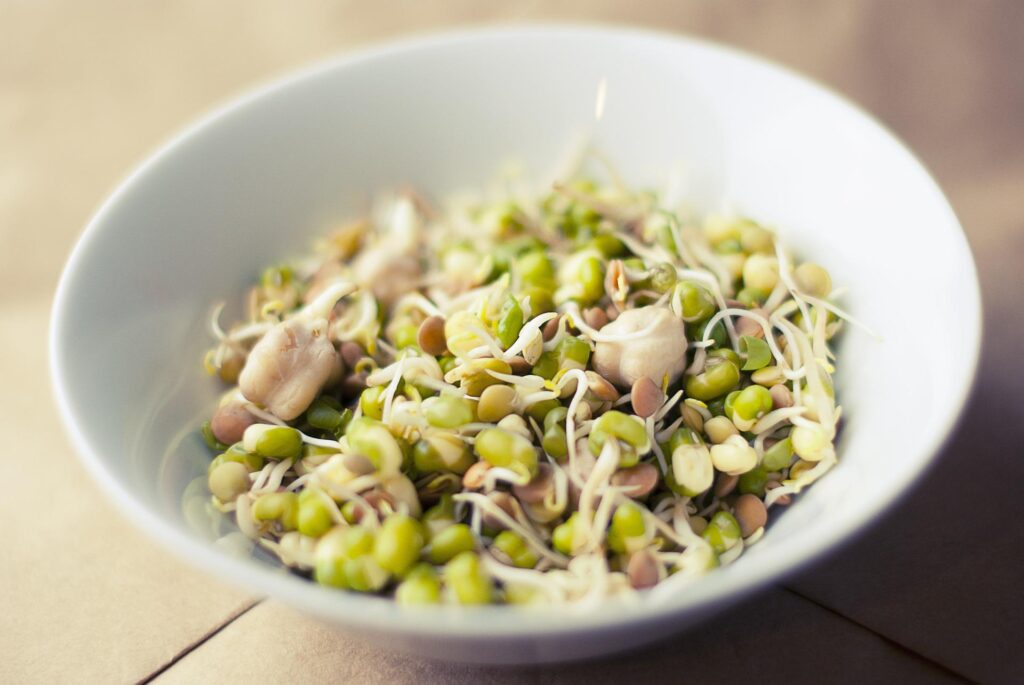
SPROUTING GROWERS
Plain jar, reusable mesh/ gauze. See-through jar (you don’t even need a lid), a small piece of natural fabric and a rubber band.
Sprouting jar with lid and base. A mason jar with a stainless steel screen sprouting lid, base, and jar stand.
Sprout tower. Traditionally, these have 3 towers and you can grow different sprouts on each tower.
You can find one in our store.
SPROUTING PROCESS
- Pour your seeds into the sprouting container.
- Soak them overnight. We suggest 1 part seeds and 2-3 parts of water.
- Next morning, pour out the water and rinse the seeds 2 to 3 times thoroughly. If you germinate in a jar, make the mouth of the jar drain downwards. Then the excess water flows out and creates a favorable environment for sprouting.
- Repeat the rinse every morning and evening with cold water.
- Depending on the plant, the sprouts will be ready to eat in 2-9 days. If the sprouts are ready, you can keep them in the refrigerator for about a week.
NB! Your sprouts don’t like too much light while sprouting. Don’t expose them to sunlight.
SEEDS
You can sprout vegetable and grain seeds. NB! If you buy your seeds in supermarkets or gardening stores, there is a wide assortment. These seeds may not be the best for sprouting. They are meant for cooking and may contain pathogens. The seeds sold in gardening stores are intended for growing full-grown plants outdoors, and they are, in most cases, coated with a chemical capsule to be able to withstand outdoor conditions. Seeds for sprouting should be preferably organic and labeled for sprouting.
Our seeds are meant for sprouting and growing microgreens. They are laboratory tested and verified and do not contain coliform (E.coli) or salmonella. Growers of germination-specific seeds take care to ensure that their seeds are very clean – meaning free of harmful bacteria and other pathogens that can thrive in the germination environment. All seeds in our store are also recognized with the EU organic label.
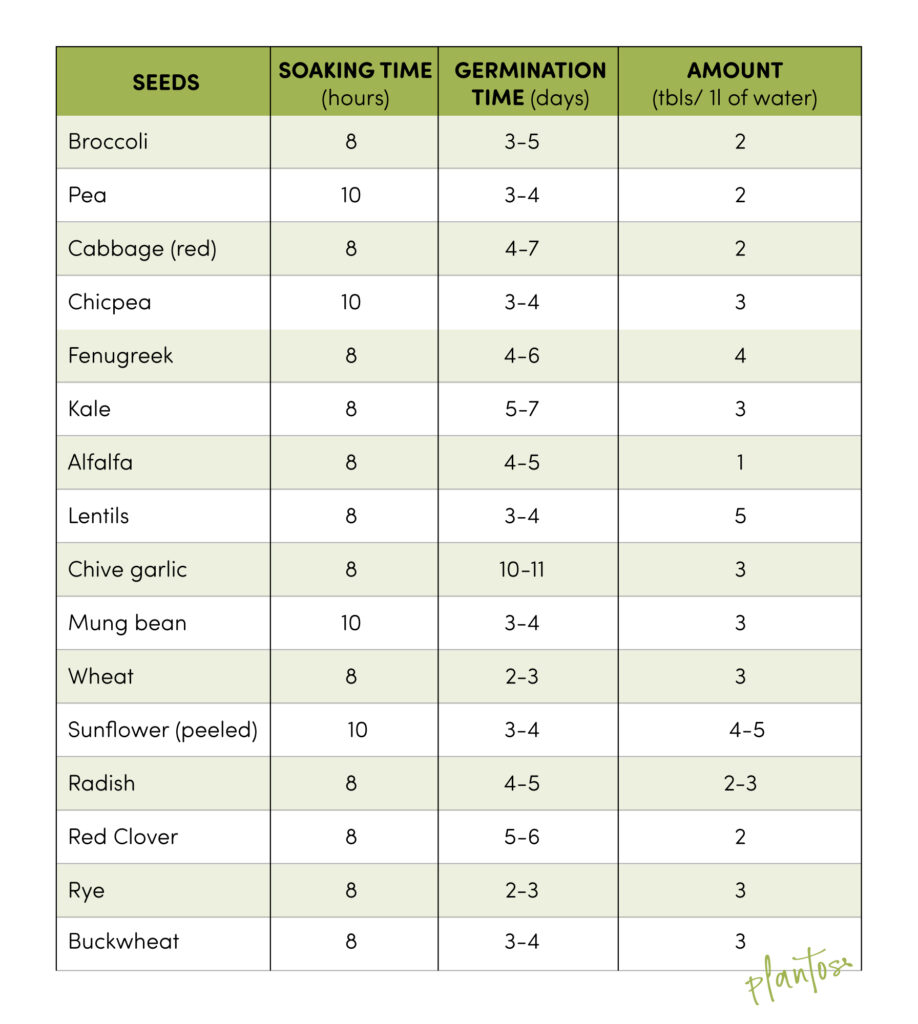
We advise soaking the seeds before germination. Different seeds absorb different amounts of water. Smaller seeds a little less water, but beans, peas and chickpeas need more water. Our recipe is simple – 1 part seeds and 2-3 parts water.
The sprouts of different seeds are ready at different times.
See the table below for soaking time. You certainly don’t have to follow it to the minute! For example, put the seeds in water in the evening and in the morning, you can put them in the germination container.
We have also included approximate sprouting times according to our experiments.
BENEFITS OF SPROUTS
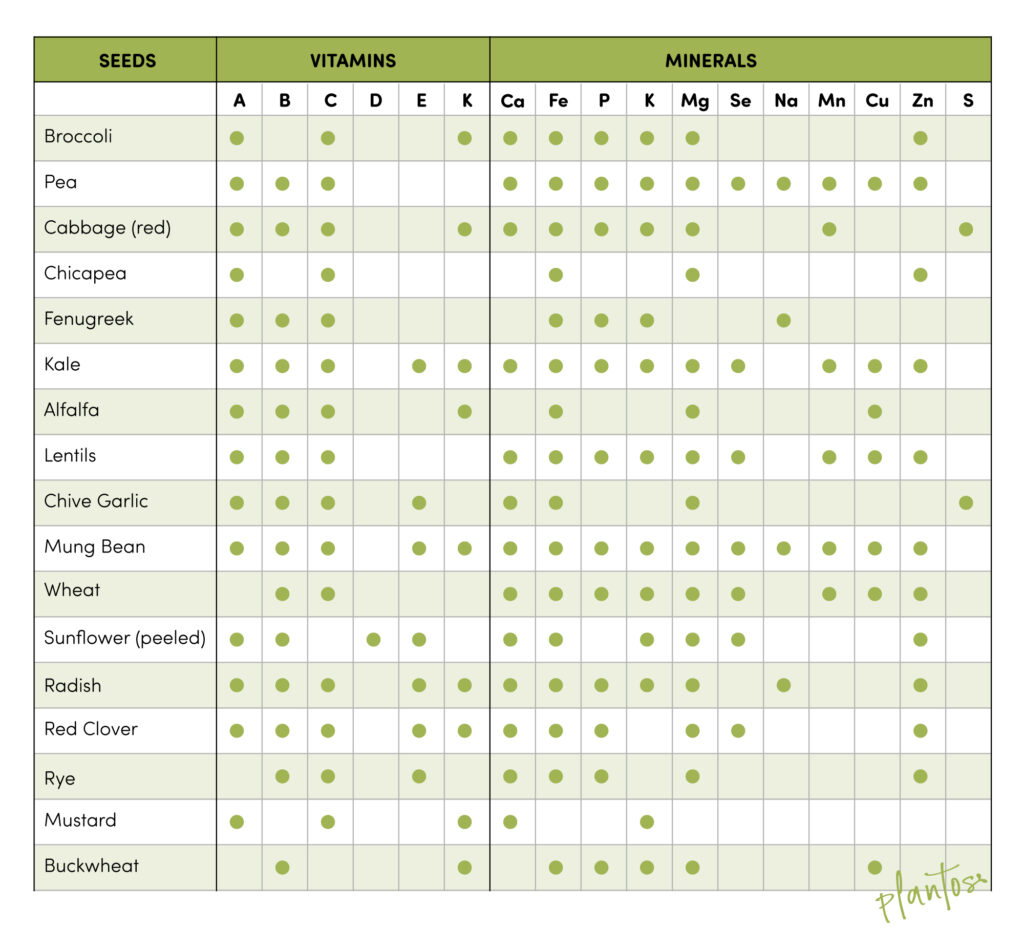
During the germination process, many biochemical processes take place. The seeds contain starch, fats and proteins. During the germination process, these substances are broken down into simpler and more absorbable forms. It is the case with beans and lentils – sprouting allows the body to digest and acquire nutrients much more simply. Sprouts contain various vitamins and minerals such as calcium, magnesium, potassium, zinc, sodium, cobalt, sulfur, silicon, iron, etc. During sprouting, essential amino acids and unsaturated fatty acids are produced, and the number of vitamin groups B and E increases. They also have a good amount of fiber.
The content of vitamins and minerals varies depending on the variety.
ROOT HAIR
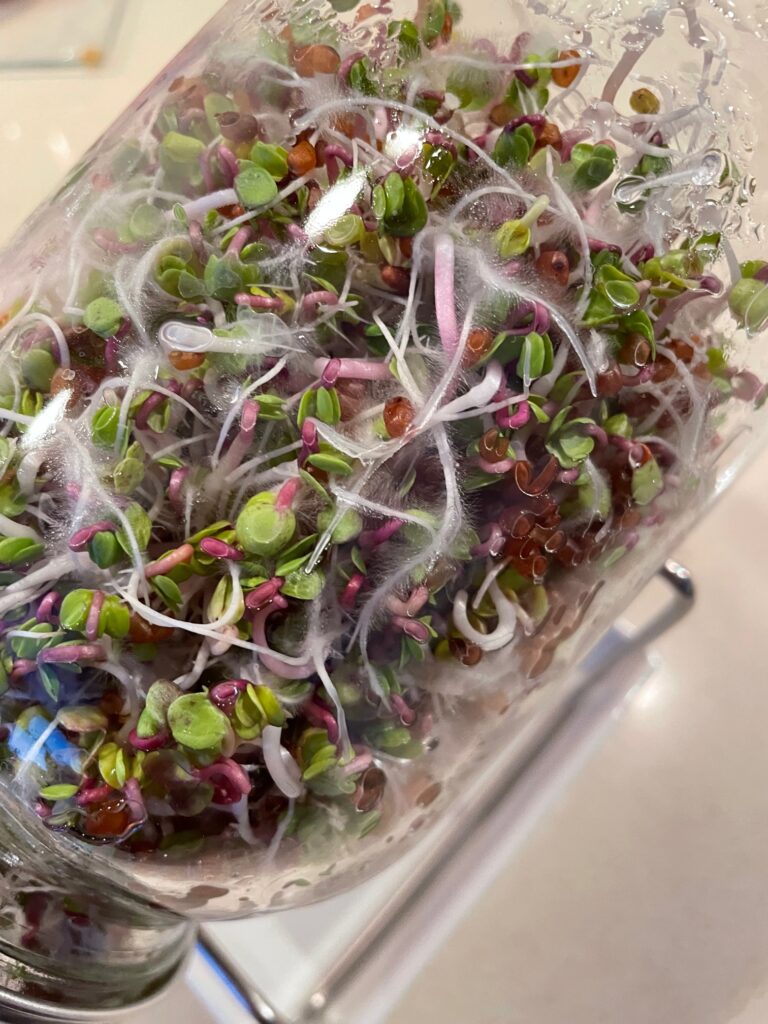
One more thing we need to talk about. When germinating for the first time, you will see small hair on your tiny plants. At first, they seem like a mold. In most cases, it is not mold. It is your sprout’s root hair. They are edible and have the same health benefits as the rest of the plant. More information on the root hair.
Lindsay Johnson has said, „It is not the food in your life but life in your food“
If you are keen to start sprouting, you can find a STARTER KIT in our store. The simplest seeds to start with are mung beans and Alfalfa. We also have a GIFT SET, which contains a sprouting jar and different kinds of seeds.
Sources:
- S.A. Mir, S. Farooq, M.A. Shah, S.A. Sofi, B.N. Dar, A.M. Hamdani, A.M. Khaneghah. An overview of sprouts nutritional properties, pathogens and econtamination technologies.
- M. M´arton, Zs. M´andoki, Zs. Csap´o-Kiss, J. Csap´o. The role of sprouts in human nutrition. A review.
- T.A. El-Adawy, E.H. Rahma, A.A. El-Bedaway, A.E. El-Beltagy. Nutritional potential and functional properties of germinated mung bean, pea and lentil seeds.
- WebMD
- Nutritiondata.self.com


